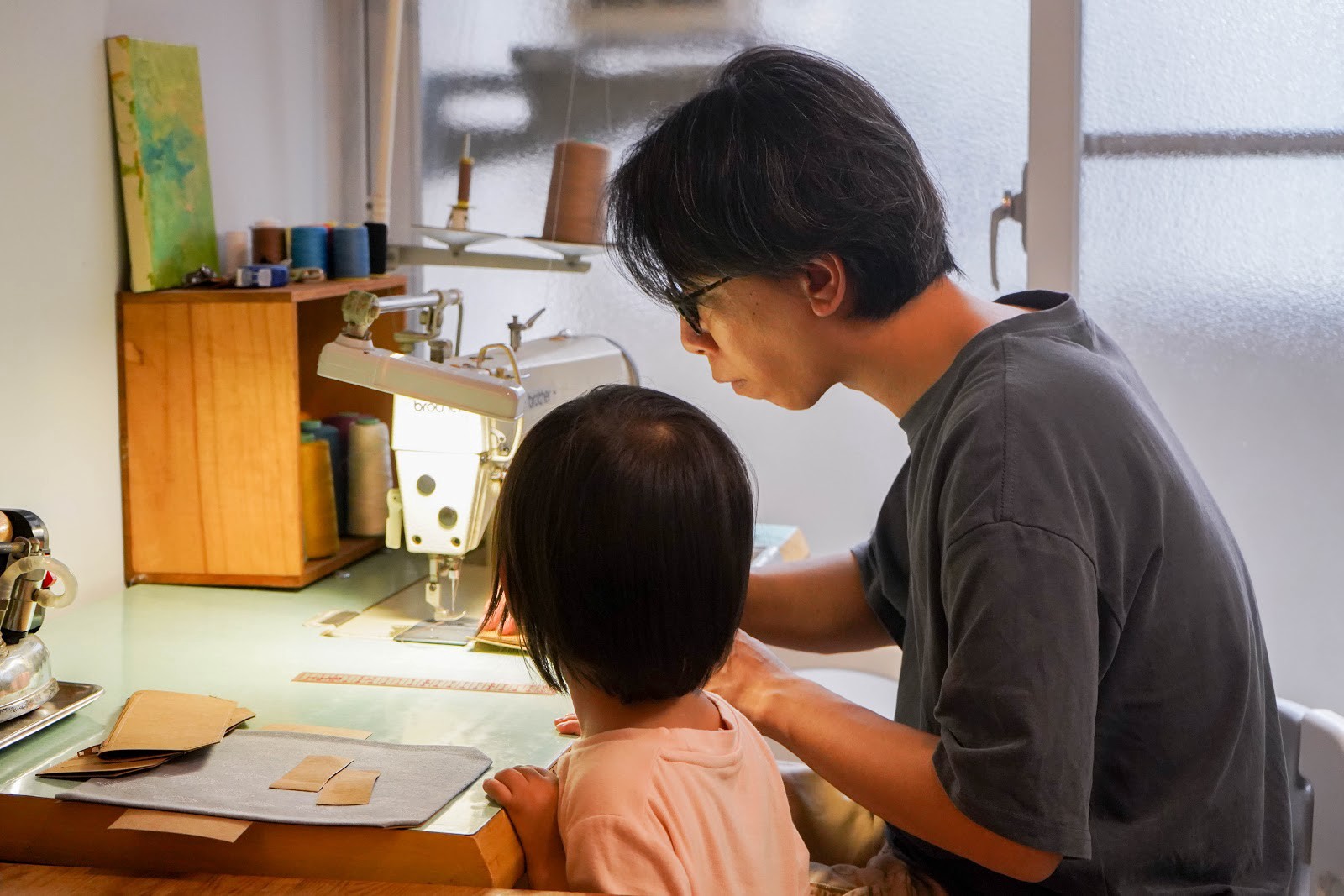
The "1983ER" handmade studio is hidden inside an ordinary apartment building. Under yellowish light, you can see a sewing machine, cutting mat, and measuring ruler intermingling with children's role-play toys. These seemingly unrelated objects sit neatly together in unexpected harmony — a place that is not only where "washable kraft paper" wallets are made, but also the living room of designer couple Ray (Chung Yu-yueh) and Ein (Hsu I-ying), and a play space for their three-year-old daughter Cong.
The Brand Began as Pure Interest
"At first it was just for fun; we didn't think that much about it. The name was just something we came up with to give our products a brand." "1983ER" was founded when Ray was a third-year student in the Fashion Design department at Shih Chien University. It began simply because he felt bored keeping his girlfriend Ein company while she worked a part-time job, and wanted to do something interesting. So during breaks between classes, they started making handmade paper coin purses in the school studio, and with the permission of the clothing-store boss where they worked part-time, they began selling the wallets in the shop.
The origin of the brand name is as simple as its founding reason: in "1983ER," "1983" comes from Ray and Ein's birth year, 1983, and "ER" from the first letters of their English names. Not only is the name closely tied to the two of them, but the later-added trademark is also related to their Chinese zodiac — a coin-saving "pig" bank.
After graduating, Ray and Ein did not immediately devote themselves fully to the handmade brand. But after working for a year or two, they found that a workplace where they could only imitate foreign designs was not what they wanted. Wanting the freedom to create, they resigned from their stable jobs one after another — undeterred by the 2008 financial crisis — and plunged into entrepreneurship.
Change Rooted in Life
When the brand was first founded, "1983ER" used waterproof advertising pages torn from secondhand fashion magazines as the main material for handmade paper wallets. After a month or two, the novelty-seeking Ray and Ein wanted to put their own designs or photos on the wallets. They tried various papers, even developing a water-resistant paper similar to oilpaper based on their university expertise, but none proved as suitable as washable kraft paper — waterproof, durable, and naturally decomposable.
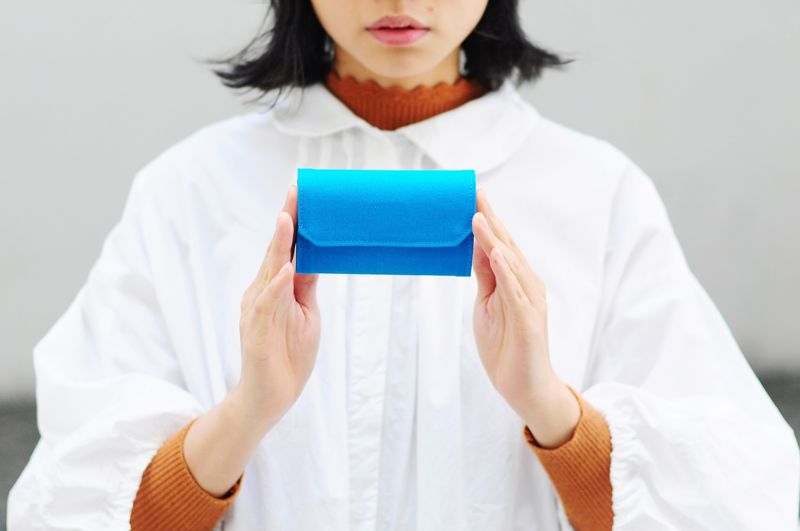
After adopting plain, leather-textured "washable kraft paper" of a certain thickness, "1983ER" wallets diversified in style: from wallets covered in hand-drawn illustrations to those patterned with landscape photos, and recently many solid-color fabric-paper long wallets.
As "1983ER" wallets evolved over time, the style gradually shifted from rich patterns to minimalist monochrome. Ray says this is because as they aged, their preferences changed; their bag-making inspiration all comes from life closely tied to themselves — such as Cong's casual doodles or beautiful scenery they once saw.
Eco Commitment from the Self
Beyond drawing inspiration from life, "1983ER's" eco commitment is also personal. Not only is the wallet's main material washable kraft paper, which can be decomposed by nature, but the paper box packaging the wallets come in is also carefully designed so buyers don't need to repackage them as gifts, avoiding wasteful secondary packaging.
"I feel that things which aren't eco-friendly are sometimes harmful to our own bodies!" Ein, who cares deeply about health, believes environmental protection and health are closely linked — some behaviors and products not only harm nature but also burden the human body. For example, plastic products that harm the environment can easily release toxins harmful to humans if used improperly.
Imagination of the Future as a Source of Strength
Over the years, not only have the wallet materials and styles changed, but Ray and Ein's way of running "1983ER" has also evolved. Looking back on more than a decade of entrepreneurship, Ein says: "The whole way was difficulties; we just solved them one by one." Before gaining recognition, finances were the biggest difficulty. At the start they relied on selling at stalls, but often encountered bad weather — continuous rain for days — making it impossible to set up.
Fortunately, there were always benefactors to help. Ray and Ein got through tough times by taking on various profession-related projects — assisting with picture-book illustrations, making customized products, teaching school teachers crafts, and so on. The optimistic Ray says: "Money problems were always something Ein worried about more easily; I don't think about it as much. As long as I figure out what I want, I don't dwell on it — I just keep doing it slowly, and naturally I can weather the difficult periods."
Ray believes, as Einstein said, that "imagination is more important than knowledge." As long as you keep imagining the future you want, with patience and passion, it's easier not to lose your way or abandon your original intention. Today, Ray and Ein have no regrets about giving up stable jobs back then, because while running "1983ER" they met many different friends, and because this relatively free work let them never miss their daughter Cong's growing-up.
Perhaps on the road to pursuing our dreams, we should all be like Ray — hold beautiful imaginings of the future, with less confusion and more determination, never easily defeated by difficulties, and march firmly toward the goals we have set.